Leibniz Chairs
Leibniz Chairs represent a particularly close connection between an international researcher and a Leibniz institute. These researchers must be of high international reputation and should be engaged in active and prospectively long-term scholarly collaboration with the proposing institute.
Leibniz Institutes can apply centrally for a researcher to be appointed to a Leibniz Chair on an honorary basis. In the event of a positive decision by the Executive Board, the Leibniz Institute appoints the nominee – usually for a term of five years.

Prof. Alessandro Cellerino
Alessandro Cellerino is the Leibniz Chair at the Leibniz Institute on Aging – Fritz Lipmann Institute (FLI) and is a professor at the Scuola Normale Superiore in Pisa. In 2003, Cellerino came up with the idea of establishing the very short-lived turquoise killifish as a new animal model in aging research (it has a life expectancy of just 4–12 months). This small fish from south-east Africa ages in a similar way to humans, but much faster. Since Cellerino’s fundamental research, the turquoise killifish has become the shortest-lived vertebrate to be raised under laboratory conditions. Cellerino has been connected to the FLI since 2006, when he was a junior research group leader. Today within the FLI, he leads a Pisa-based associated research group on ‘Biology of Aging: Aging in Fast Motion’.
Prof. Karin Jandeleit-Dahm
Karin Jandeleit-Dahm is the Leibniz Chair at the German Diabetes Center (DDZ), Leibniz Center for Diabetes Research at Heinrich Heine University Düsseldorf, and is Professor of Medicine and Deputy Head of the Diabetes Department at Monash University in Melbourne. Jandeleit-Dahm has published pioneering research findings on the role of oxidative stress in diabetic complications, especially in diabetic kidney disease (nephropathy). These fundamental findings led to clinical trials for the treatment of people with type 1 diabetes and diabetic nephropathy. Jandeleit-Dahm has been associated with the DDZ since 2018, where she now leads the research group on Diabetic Nephropathy, which studies mitochondrial dysfunction.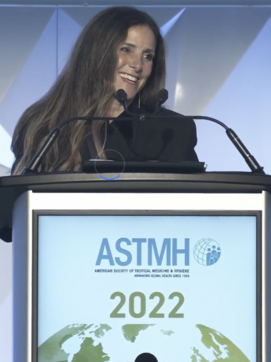
Prof. Anna-Maria Mandalakes
Anna-Maria Mandalakes is Leibniz Chair at FZB - Research Center Borstel, Leibniz Lung Center, and Professor of Pediatrics and Tropical Medicine at Baylor College of Medicine, Houston, where she is head of the Division of Global and Immigrant Health and is responsible for the Global Tuberculosis Program at Texas Children's Hospital. She is also an associate professor in the School of Public Health at The University of Texas Health Science Center Houston in the Department of Epidemiology, Human Genetics and Environmental Sciences. For nearly three decades, her translational research has focused on the identification of Mycobacterium tuberculosis infection and the prevention of tuberculosis disease in children. Anna-Maria Mandalakes has been closely associated with FZB in the field of tuberculosis research and prevention of tuberculosis disease since 2015.
Prof. Jenny Mander
Jenny Mander is Leibniz Chair at the German Maritime Museum – Leibniz Institute for Maritime History (DSM) and Co-Director of the Centre for the Study of Global Human Movement at the University of Cambridge (UK). Her research focuses on the early modern period and the way in which the Enlightenment has been used (and misused) as a historiographical reference point in late modern debates. Mander is intensively engaged with the question of how global exchange and transnational movements shape our common history in Europe and beyond. In doing so, she expands the DSM's expertise beyond transatlantic migration history to a global maritime perspective, thereby contributing significantly to raising the institute's profile. The collaboration with Jenny Mander involves establishing a strategic, long-term partnership between the Centre for the Study of Global Human Movement and the DSM.
Prof. Lucia A. Reisch
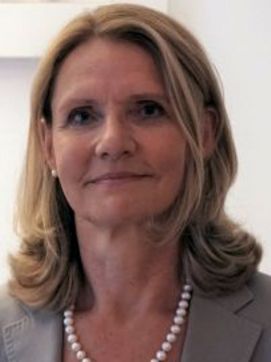
Lucia A. Reisch is the Leibniz Chair at the Leibniz Institute for Prevention Research and Epidemiology (BIPS) and is a full professor at the Copenhagen Business School and a visiting professor at Zeppelin University in Friedrichshafen. Her research focuses on behavioural public policy, sustainable consumption and consumer policy. She became a life member of the National Academy of Science and Engineering (acatech) in 2017. Reisch has been closely associated with the BIPS since 2006, when she worked on the IDEFICS/I.Family project on the causes of lifestyle-related diseases. Among other things, she is currently supporting the Policy Evaluation Network (PEN), evaluating the approaches, implementation and effectiveness of policy measures to promote healthy eating and physical exercise in the population.
Prof. Thierry Wirth
Thierry Wirth is Leibniz Chair at FZB - Research Center Borstel, Leibniz Lung Center, and Professor of Evolutionary Genomics with proven expertise in molecular epidemiology of bacterial pathogens at the Department of Systematics and Evolution, Natural History Museum, Paris. His scientific focus is on the estimation and prediction of epidemics using machine learning technologies and Bayesian statistics. Other research focuses on the rise of antibiotic resistance and secondary compensatory mutations in MDR strains. In addition, Thierry Wirth focuses on the coalescence, demography, and origin of major human pathogens, including the impact of globalization and human migration on pathogen spread. Thierry Wirth has been closely associated with the FZB in the field of tuberculosis research since 2005.