Delegation
The Leibniz Delegation is travelling through Japan with 16 researchers and management staff from 12 Leibniz Institutes and the Leibniz headquarters.
This delegation has a dual leadership being led by Barbara Sturm, Vice-President of the Leibniz Association and director of the ATB - Leibniz Institute for Agricultural Engineering and Bioeconomy, as well as by Klaus Lieb, director of the LIR – Leibniz Institute for Resilience Research.
If you are interested in collaborating with a Leibniz researcher, please contact them directly vie e-mail. For more general enquiries or further questions, please send an e-mail to japan(at)leibniz-gemeinschaft.de
Mathematics, Natural Sciences, Engineering
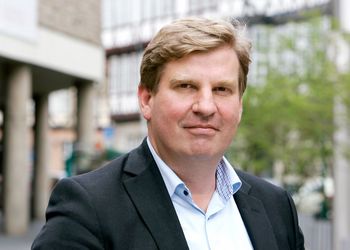
Professor Sören Auer
TIB – Leibniz Information Centre for Science and Technology, Hannover
Director and Professor
Head of research group "Data Science and Digital Libraries"
Professor for Data Science and Digital Libraries at Leibniz University HannoverContact: auer(at)tib.eu
Sören Auer is Professor of Data Science and Digital Libraries at Leibniz Universität Hannover and Director of the TIB since 2017. Prof. Auer has made important contributions to semantic technologies, knowledge engineering and information systems. He is the author (resp. co-author) of over 200 peer-reviewed scientific publications. He has received several awards, including an ERC Consolidator Grant, a SWSA ten-year award and the ESWC 7-year Best Paper Award. He is co-founder of high potential research and community projects such as the Wikipedia semantification project DBpedia, the Open Research Knowledge Graph ORKG.org and the innovative technology start-up eccenca.com. Prof. Auer is an expert for industry, European Commission, W3C, the German National Research Data Infrastructure (NFDI) and the European Open Science Cloud (EOSC).
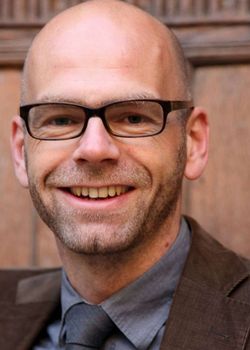
Professor Dr Wolfram Horstmann
FIZ Karlsruhe - Leibniz Institute for Information Infrastructure
President and CEOContact: wolfram.horstmann(at)fiz-karlsruhe.de
Wolfram Horstmann is Director and CEO of the Leibniz Institute for Information Infrastructure “FIZ Karlsruhe” (Germany) as of January 2024. Previously, he served as Director of Göttingen State and University Library (Germany) 2014-2023, Associate Director of the Bodleian Libraries of the University of Oxford (UK) 2012-2014, and CIO at Bielefeld University (Germany) 2007-2011. As professor, he is teaching and researching Digital Science at the Berlin School of Library and Information Sciences at the Humboldt University since 2014. Wolfram is engaging in initiatives, operations and science policy for digital research developments in Germany, Europe, and internationally, working across disciplines with natural sciences, life sciences, social sciences and the humanities. He is trained as biologist in the field of computational neuroscience and electrophysiology, worked in his early academic life on educational simulations for the neurosciences, neuroinformatics, cognitive sciences, as well as articifical intelligence and, for his doctoral thesis, on the epistemology of simulations.
Life Sciences
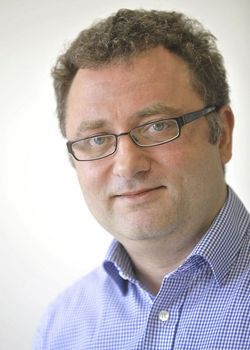
Professor Hadi Al-Hasani
German Diabetes Center - Leibniz Institute for Diabetes Research at Heinrich Heine University Düsseldorf (DDZ)
Director, Institute for Clinical Biochemistry and PathobiochemistryContact: hadi.al-hasani(at)ddz.de
since 2011: Full professor, Director of Institute for Clinical Biochemistry and Pathobiochemistry, German Diabetes Center Leibniz Center for Diabetes Research at Heinrich Heine University Düsseldorf
2002 – 2011: Group leader, German Institute of Human Nutrition Potsdam (DIfE)
1996 – 1998: Postdoctoral fellow at the National Institutes of Health, Bethesda (USA), Diabetes Branch, National Institutes of Diabetes and Digestive and Kidney Diseases, Dr. Samuel W. Cushman
My research explores how genetic factors contribute to insulin resistance and type 2 diabetes, focusing on how insulin regulates glucose uptake in fat and muscle tissues. My team discovered the RabGAPs TBC1D1/4 as key regulators of GLUT4 translocation. Using genomics and proteomics, we study causes of impaired insulin signaling. As a professor at HHU, I teach molecular biomedicine and lead VIVID, a DFG-funded graduate school dedicated to type 2 diabetes.
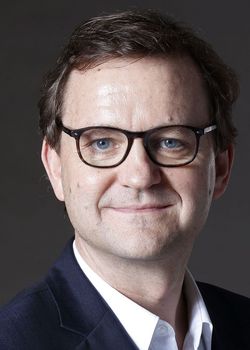
Professor Klaus Lieb
Leibniz Institute for Resilience Research (LIR), Mainz
Scientific Director
Director of the Department of Psychiatry and Psychotherapy, University Medical Center MainzContact: klaus.lieb(at)lir-mainz.de
Klaus Lieb is Scientific Director of the Leibniz Institute for Resilience Research (LIR) Mainz since 2020 and Professor and Chair of the Department of Psychiatry and Psychotherapy at the University Medical Centre in Mainz, Germany, since 2007. He is an expert in systematic reviews and meta-analyses on resilience mechanisms and interventions and in the neurobiology and therapy of major depressive disorders and borderline personality disorder. He studied medicine and philosophy and worked at the universities of Ulm and Freiburg, before he moved to Mainz. He was awarded with several prices, published more than 300 scientific papers and edits standard textbooks of psychiatry. Prof. Lieb leads the delegation of the Leibniz Association to Japan in 2025.
Professor Stephanie Pfänder
Leibniz Institute of Virology (LIV), Hamburg
Head Research Unit “Emerging Viruses”Contact: stephanie.pfaender(at)leibniz-liv.de
Prof. Dr. Stephanie Pfänder is a professor of Emerging Viruses at the Leibniz Institute of Virology and the University of Lübeck (since 2024). Previously, she was a junior professor of RNA virology at Ruhr University Bochum (2020–2023). She holds degrees in Biology (B.Sc.), Biomedicine (M.Sc.), and a Ph.D. in Infection Research. Her research focuses on virus-host interactions of emerging RNA viruses, especially coronaviruses and flaviviruses.
Professor Karl Lenhard Rudolph
Leibniz Institute on Aging - Fritz Lipmann Institute (FLI), Jena
Full Professor and leader of the research group on Stem Cell and Metabolism AgingLenhard Rudolph received Emmy-Noether and Heisenberg awards of the DFG and advanced ERC funding of the European Union. He discovered new causal roles of organism aging induced by (i) telomere dysfunction, (ii) age-associated alterations in the epigenome and in developmental pathway control, and (iii) metabolism aging. Based on this knowledge, he develops new interventions to reverse aging-associated impairments in metabolism and epigenetic memory to improve healthy aging.
Professor Hajo Zeeb
Leibniz Institute for Prevention Research and Epidemiology (BIPS), Bremen
Professor and Head of Department of Prevention and EvaluationContact: zeeb(at)leibniz-bips.de
Professor of Epidemiology at the University of Bremen, Head of the Department of Prevention and Evaluation at the Leibniz-Institute for Prevention Research and Epidemiology – BIPS, Bremen, with earlier positions at WHO Geneva and several German universities. Main research interests: social epidemiology with a focus on migration and health, environmental/radiation epidemiology as well as the evidence base of Public Health. I am the speaker of the interdisciplinary Leibniz-Science Campus Digital Public Health Bremen. Since 2024 I have been senior visiting scientist at WHO/IARC in Lyon, focusing on the European Code against Cancer (ECAC V).
Environmental Sciences
Professor Barbara Sturm
Leibniz Institute for Agricultural Engineering and Bioeconomy (ATB), Potsdam
Scientific DirectorContact: director(at)atb-potsdam.de
- Scientific Director and Chair of the Executive Board at the Leibniz Institute for Agricultural Engineering and Bioeconomy (ATB) in Potsdam
- Professor of Agricultural Engineering in Bioeconomic Systems at Humboldt Universität zu Berlin (HUB)
- She was elected Vice President of the Leibniz Association in 2021 (currently serving the second term) and President of the European Society of Agricultural Engineers (EurAgEng) in 2022 (currently immediate past president).
Research focus:
- Digital Twins for smart food processing, location-specific process plants and energy supply concepts, transferable system approaches for resource-efficient food processing, data management and automation concepts in the areas of post-harvest technology, system approaches for the implementation of bioeconomic systems
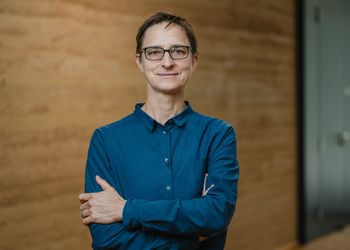
Professor Cornelia Weltzien
Leibniz Institute for Agricultural Engineering and Bioeconomy (ATB)
Head of department AgromechatronicsContact: cweltzien(at)atb-potsdam.de
Prof. Dr.-Ing. Cornelia Weltzien is an internationally recognized elite researcher in the field of digital agriculture, heading Agromechatronics Department at ATB and the chair at TU Berlin. Her expertise are agromechatronic systems & digital transformation in agriculture with a research focus on “enabling diversity in crop production by technology”. She studied agricultural engineering at TH Köln and TU Braunschweig (PhD 2008) and gained experience in the mobile working machinery industry.
Economics, Social Sciences, Spatial Research
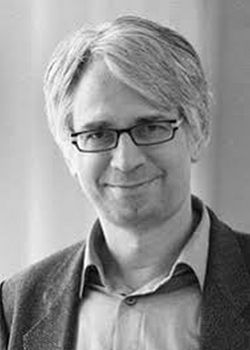
Dr Timo Borst
ZBW – Leibniz Information Centre for Economics, Kiel
Head of Information Systems and Publishing TechnologiesContact: t.borst(at)zbw.eu
As a computer scientist with a master's degree and a social scientist with a doctorate, I am concerned with conceptual, scientific, and infrastructure-related issues in research infrastructure development. I entered academia after several years of conducting industrial projects for digital publishing, which were about content management and related workflows. My research topics include digital libraries, information engineering, natural language processing, conversation analysis, and research transfer.
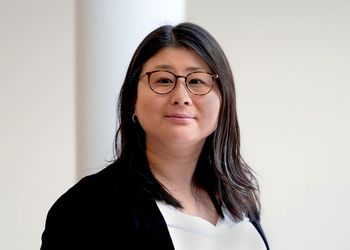
Fumie Nakamura
PRIF - Peace Research Institute Frankfurt
ResearcherContact: fumie.nakamura(at)prif.org
Fumie is a researcher at Peace Research Institute Frankfurt. She is a member of a research group Ecology, Climate, and Conflict, and assists with the coordination of the Leibnitz Research Network CrisEn. Her research interests include the role of local governments and other subnational actors in international politics, urbanization in the context of climate change, and discursive development on climate migration.
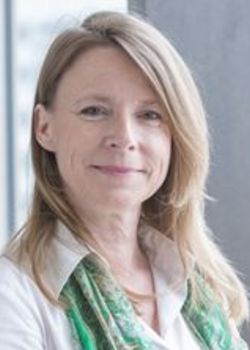
Dr Iris Wieczorek
German Institute for Global and Area Studies (GIGA), Hamburg
GIGA Institute for Asian Studies
Senior Research Fellow, Japan Representative, Head of GIGA’s Digital Transformation Lab (DigiTraL)
Contact: iris.wieczorek(at)giga-hamburg.deDr Iris Wieczorek studied Japanese and Chinese Studies, as well as Computer Science, at Hamburg University, Germany. In 2000, she joined the GIGA Institute for Asian Studies in Hamburg as a researcher, focusing on comparative assessment of the Japanese research and innovation system. In 2008, she established the Japan Office of the German Research Foundation (DFG) in Tokyo and acted as director until 2012. Subsequently, she founded IRIS Science Management Inc., a Tokyo-based consulting firm specialized in career development and training in academia, strategic research management, policy advice, and international science cooperation. She holds a senior research position at GIGA, which she also represents in Japan, and heads GIGA’s Digital Transformation Lab (DigiTraL), funded by the German Foreign Federal Office, which explores the global political and societal impacts of digital transformation.
Humanities and Educational Research
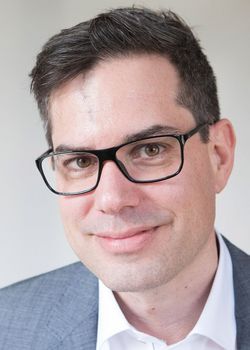
Professor Markus Huff
Leibniz-Institut für Wissensmedien (IWM), Tübingen
Vice Executive Director
Head of the Perception and Action LabContact: m.huff(at)iwm-tuebingen.de
Prof. Dr. Markus Huff studied psychology and computer science. He earned his Dr. rer. nat. in 2007 and received the Leibniz Early Career Award. Since 2020, he has held a W3 professorship in Applied Cognitive Psychology at the University of Tübingen, where he leads the Perception & Action Lab. Since 2025, he has also been deputy director at the IWM. His research focuses on science and climate communication in noisy environments, artificial intelligence, and human-AI interaction.
Leibniz Association Head Office
Dr Ewa Adamkiewicz
International Affairs
Katharina Brücher
Team Assistant | Award jury
Sarah Goharnia
Proposal Preparation and Project Management Horizon Europe | ERC | MSCA